Food truck park
Developed and operated the first — and still the only — food truck park in the Brazos Valley. That means pad layout, vendor mix, guest flow, and the unglamorous work of keeping a site legal and busy.
About
My Food Truck Concierge comes out of the Brazos Valley food scene — not a spreadsheet. The founder developed the first and only food truck park in the region, operated restaurants and mobile kitchens, and has spent years on live events, city permitting, and property development.
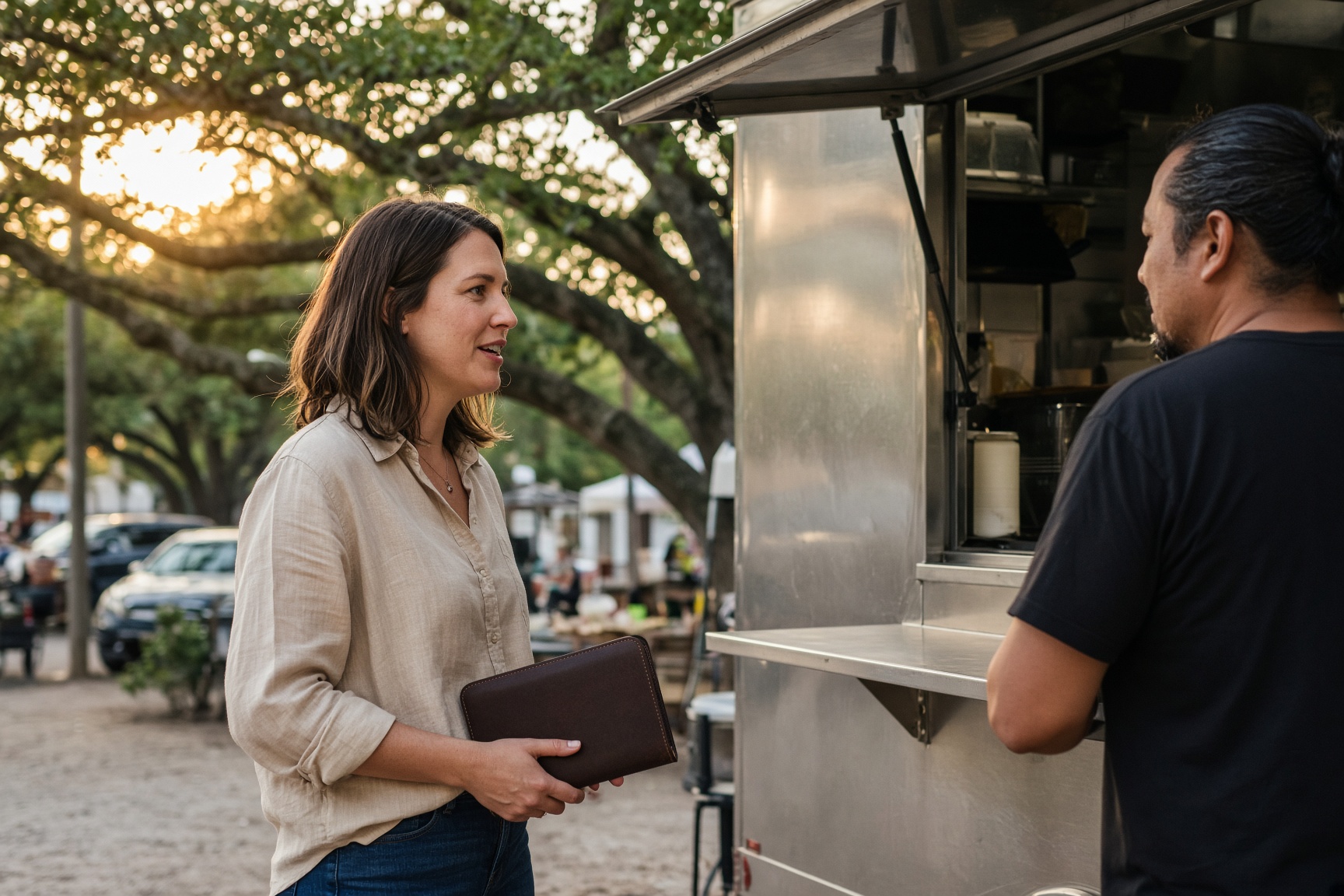
Before this company existed, the work already did: siting mobile vendors, keeping brick-and-mortar kitchens running, and putting food on the ground for live events. That is why hosts do not have to text six operators, compare deposits, and hope someone shows up with power figured out.
We sit in the middle as a coordinator — not as the food business. Each truck remains an independent vendor responsible for preparing and serving food under its own insurance and permits. We handle the booking, the site, and the night-of logistics.
We build the event to your stated all-in budget. Applicable taxes and MFTC's coordination fee are calculated before you approve the booking.
Developed and operated the first — and still the only — food truck park in the Brazos Valley. That means pad layout, vendor mix, guest flow, and the unglamorous work of keeping a site legal and busy.
Operated multiple brick-and-mortar restaurants and mobile food businesses. We already know what a truck can actually deliver on a given site — and what it cannot.
A background in live events: arrival windows, placement, power, weather, and the sequence that keeps a crowd fed without the host running the show.
Extensive work in city permitting and property development. Site constraints, inspections, and municipal process are part of the job — not a surprise on event day.